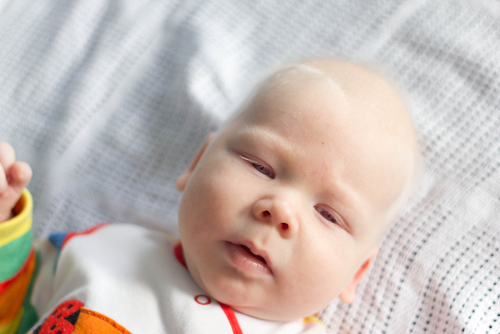


Nystagmus is an involuntary oscillatory movement of one or both eyes. This condition is not limited only to ocular problems but may also be associated with vestibular and neurological disorders. In children and adult patients presenting with complaints of nystagmus in Ankara, a detailed ophthalmologic and neurological evaluation is essential.
The most common causes of congenital nystagmus include congenital cataract, aniridia, albinism, optic nerve hypoplasia, and retinal/macular pathologies. In these patients, abnormal head postures may develop over time in order to achieve better vision by fixing the head in a certain position. In some individuals, a compensatory mechanism may occur in which the eyes deviate toward a specific direction to provide clearer vision.
The main goals of nystagmus treatment are to correct abnormal head posture and to increase foveation time (the point at which vision is sharpest) in order to improve reading speed. Treatment options for patients with nystagmus in Ankara are determined individually. Some patients, especially those who have developed a fixed head posture, may benefit from base-out prismatic lenses. In other cases, surgical treatment may be performed to correct head posture, increase foveation time, or relieve symptoms of oscillopsia (the sensation that images are not stable).
With early diagnosis and a multidisciplinary approach, successful outcomes can be achieved in the treatment of nystagmus in Ankara. If eye shaking or any suspicious visual symptoms are noticed, it is of great importance to consult a specialist ophthalmologist.